February 2, 2009

How Do You Like Them Apples?

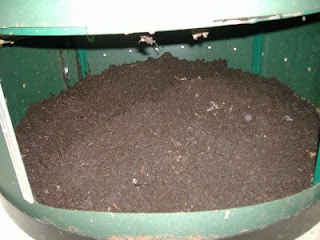
This image may look familiar if you frequently read this blog, but it shouldn't. These apples have been in the bin for over a week now and, unfortunately for my big experiment, look just like the day I put them in.

Apples are quite the hardy food it turns out. I would say if you are going on a long journey and are looking for a food that will hold up without refrigeration or heating, go with the apple!

In other news, yoga teacher training is going great- we spent this weekend philosophizing about yoga thoughts.

One thing I found way interesting was chakras.

We learned that if you or your students are having problems in a certain pose or with a certain part of the body that each pose is linked to a specific chakra that relates to a certain part of the body and a life balance or attribute that might need to flow better. The best online comparison chart I found was here.

Back to the worms soon...

January 20, 2009

A Bushel and a Peck

Experiment time! My favorite worm-loving co-worker generously donated a bag of bruised apples to the bin today. I thought it would be cool to put them in whole (pictured above) and see how long it takes them to get eaten.

I gently covered them with some peat moss so they don't attract any other "friends", but I'm gonna uncover and snap another photo in a few days.


Did you know:

--- Apples are grown in all fifty states.

--- A bushel of apples equals 42 pounds, and a peck is 10.5 pounds.

--- One gallon of apple cider takes 36 apples to create.

--- One apple contains only around 80 calories and has no sodium, fat, or cholesterol.

If you liked reading these, visit Apples & More Apple Facts.


BTW, I am STILL sifting the castings from the big crank. I have to keep waiting for the layers to dry out a little- the damper the castings the more they clog up the colander/strainer. And my basement isn't the warmest place to hang out with damp hands!

January 11, 2009

New Year, New Worm Goals

This New Year, I not only resolved to be a vegetarian (I've lived to Day 11) but also to continue my efforts with Lilliworm. So, in addition to my full time job, yoga teacher training, homemaking, skiing, and dog walking- I know, call the WAAAHMBULANCE!- I do plan to keep the worm dreams alive!

Some of the challenges I've had are:

-PATIENCE- Rome wasn't built in a day and neither was a super productive worm wigwam. I've always had problems with patience- I had my worm empire built and producing before the first pound of worms ever even arrived! It really has been an adventure with worms because I've had to learn to move at their pace, not my own personal breakneck speed.

-PACKAGING- Packaging is expensive and it takes time to test which might work best. The trick is coming up with a creative packaging idea that is efficient, cost-effective, and totally environmentally freindly (EF). Anyone can toss some castings into a plastic bag for sale, but how EF is that?

-LABELS- Sheesh, the information out there about labeling and making claims and wording guarantees is endless. If I use the word "fertilizer" I have to get a certain license and pay for certifications, if I call it "soil conditioner" the state can ask for another type of fee, and on and on and on. Remember the saying "Ask forgiveness instead of permission?" Eventually, I am going to have to just go with that, because I know I'll miss some rule or regulation somewhere!

-TIME- You know what I mean. Job, exercise, dog, husband, ski season... I have tried to carve out a few hours each week for worms, but its been difficult over the last month or so.

Hopefully the resolution will give me a sense of responsibility to fulfill my promises to myself in 2009!

December 31, 2008

Screen Til Your Fingers Bleed

With the recent wigwam harvest comes a whole new issue: how to efficiently screen the volume of castings collected. My original method of an oversized colander into a tall bucket worked for one or two shoebox-sized Rubbermaid containers, but not so great for the giant heaps the wigwam produced.

Today I loaded the castings and shook and shimmied and scooped around then dumped the scrappy stuff- again and again and again and again- only to find I had done about a fifth to a quarter of the pile. I was starting to get blisters from screening!

Certainly there is a better way- HELP!

Keep in mind I currently operate out of my basement, so the new method has to be not only efficient but somewhat CLEAN. I can't have castings flying all over and about, so I have to find a way or system that can do more volume with minimal mess and space.

Please leave any suggestions or creative ideas for a clean, space saving method of screening by leaving a comment below. All ideas welcome!

December 26, 2008

Patience is a Virtue

I am still waiting patiently for the worm castings/vermicompost to dry that I recently harvested...zzzzzzzzzzz...I've read two different points on this matter:

1. The vermicompost shouldn't be allowed to dry out all the way because retaining a little of the moisture keeps the beneficial bacteria active in it

2. It doesn't matter if the vermicompost dries out because the beneficial bacteria is reactivated once it gets wet.

Both places I read these things seemed to be reputable sources. If anyone has any insight or a good answer to that, please let me know!

In the meantime I had a great Christmas Eve & Christmas Day- which resulted in a whole bunch of worm bowls ready for feeding. I plan to do some screening either Sunday, Monday, or Tuesday, depending on how my gift returning schedule pans out.

Tomorrow, it is time for twisting and bending adventures at an afternoon AcroYoga workshop. I have to keep in shape for all this harvesting!

December 16, 2008

The Moment We've All Been Waiting For.....

FINALLY it's the day I give the wigwam its first crank!

Before I get to the good stuff, you need some background and lead up info. First, the pic of the multitude of escapees I talked about in my last post:worm wigwamEEWWW! See what I mean? Soooo gross, even for a worm lover!!!

Next up is a before pic of the area where the long-awaited organic fertilizer would soon be falling. After all this time, I finally got to open the trap door!

The stuff already there must have fizzled down:
harvesting worm wigwam
Newsflash: cranking the wigwam is a lot of work!

The crank moves real easy, that's not the issue.

It's just that only a little falls at a time so I was cranking like a maniac for five straight minutes. In the end, I had a humongous pile of scrumptious vermicomposty worm castings:harvesting worm wigwam
I put the castings in a large plastic bin so they could dry out before being screened (notice all the worm related equipment! I never thought I'd have a whole little workshop for worm poo!):vermicompost
The level inside (where the worms are) fell about five to six inches with that cranking, and I didn't have enough room in the plastic container pictured above for all that dropped, happy day!

Of course, you all know about my penchant for saving small lives and even potential lives. I couldn't leave this post about the first crank without showing the valiant effort to save the extreme bottom dwellers of the wigwam:worm eggs
I rescued about 10-15 worms out of the castings I cranked out. ANOTHER MYTH DEBUNKED- all the worms don't live in the top few inches where the food is. Some live in the very bottom layers and have to be forcefully relocated!

This made me wonder: what if I could tag the worms that I found so the next time I cranked I could see if the same ones were at the bottom again? This would also be helpful in the case of the escapees- I could tell if recent escapees were repeat offenders. Hmmm.....

ANYWAY, stay tuned for information on drying, screening, and packaging. Lilliworm rolls on!

December 13, 2008

The Uncalm Before The Turn

Just a quick note before the first turn--- the word must be out in the wigwam that big things are about to happen. I have more escapees than ever!

Perhaps you may remember from an earlier post that some wanderers have seen fit to explore beyond the normal boundaries of their home and wedge themselves in between the outer wall and insulation piece.

My usual response is to yank the side back and quickly scoop the 10-20 defectors and return them to the middle of the bin.

Well, my past few look-sees have proven to be quite the rescue mission, as in HANDFULS of worms have begun to congregate in between.

 I don't understand it: I haven't changed the conditions inside the bin, and the area they are congregated in has none of the benefits of being inside the bin- no food, no warmth, no moisture- yet the exodus continues.

Now maybe I am over-estimating how much of the herd is really migrating, because hopefully I have around 15-20 pounds of worms by now- so maybe a few handfuls is nothing.

But, I'm not gonna lie- the problem of rescuing handfuls of worms is more of a mental issue than an operational one. Handfuls of worms are kinda gross and when grabbed, extremely active- ew!

My hope is that the turn of the handle will lower the level and make the worms' supposed promised land between the walls a little more difficult to reach!