I am happy to announce a Lilliworm first: a guest blogger, Sara Collins!
Sara is a writer for NerdWallet. She works to help readers learn about every subject, from green gardening to end of life healthcare costs- that's some serious territory to cover! She likes to hike and travel, and majored in English at Northeastern. You can even check out her Google+ page at https://plus.google.com/
Now, here's Sara dropping her knowledge about the six bugs us gardeners should greet with open arms this growing season.
Six Bugs Every Gardener Should Welcome
Contrary to the poor reputation of most garden pests, some
bugs can be quite beneficial to helping a personal garden flourish all year
long. Aside from those valuable ladybugs and earthworms, there are a number of
advantageous garden insects that can pollinate your perennials and eat harmful bugs,
protecting your horticultural investment.. And although some gardeners might
find these insects undesirable or even scary, think twice before going after
them with your boot or flyswatter – they can help save your garden from the
truly harmful pests!
Spiders
 The most surprising and maybe even frightening of beneficial
insects are spiders. That’s right, you want spiders in your garden – lots of
them. In spite of many people’s innate dislike of these little guys, most
spiders are generally harmless and want nothing to do with humans. And their
usefulness in a home or personal garden cannot be overlooked, as spiders trap
huge amounts of insects in their webs, killing more pests than any other
beneficial insect. In fact, spiders will kill more bugs than all the other
contenders on this list, combined.
The most surprising and maybe even frightening of beneficial
insects are spiders. That’s right, you want spiders in your garden – lots of
them. In spite of many people’s innate dislike of these little guys, most
spiders are generally harmless and want nothing to do with humans. And their
usefulness in a home or personal garden cannot be overlooked, as spiders trap
huge amounts of insects in their webs, killing more pests than any other
beneficial insect. In fact, spiders will kill more bugs than all the other
contenders on this list, combined.
Beetles

Believe it or not, you also want plenty of beetles in your
garden. A common insect, the ground beetle, is easily attracted to nicely
mulched areas. Once in your garden these bugs will eat nearly anything that
moves, including cabbage worms, cutworms, slugs, and root maggots. They’ll even
eat weed seeds. Despite being a little creepy like those bug-trapping spiders,
beetles can help eat pests on the ground while spiders trap other bugs in their
more elevated webs.
Bumblebees

The bumblebee is
another bug whose potentially irritating presence is trumped by its
contribution to a healthy garden. Larger than the common honeybee, the
bumblebee is a very effective pollinator. As it moves from plant to plant, the
bumblebee takes nectar from flowers, which helps to pollinate,
or fertilize, the next plant the bee visits. Bumblebees, which tend to sting
only when stepped on, are very efficient pollinators, and can
benefit any garden that has flowering plants such as sunflowers, other
perennials, and even fruit trees.
Praying
Mantis

Now for an arguably more elegant garden inhabitant: the
praying mantis. Although the mantis is a relative of the much-maligned
cockroach, this graceful green giant can grow up to six inches long and can
keep your garden free of a variety of annoying garden pests by spotting them up
to 60 feet away. The praying mantis can be difficult to attract to your garden,
but if you are lucky enough to have a few, they have been known to eat moths,
aphids, crickets, mosquitoes, flies, and grasshoppers.
Fireflies

An even lovelier creature to observe in your garden is the
firefly. Most commonly seen during summer in regions with high humidity, the
firefly, as the name would suggest, emits a strong light from its abdomen to
help attract potential mates. But besides being pleasant to look at, summer
fireflies love to feast on the larvae of other insects, including some of the
most devastating garden pests like snails and slugs.
Paper
Wasps
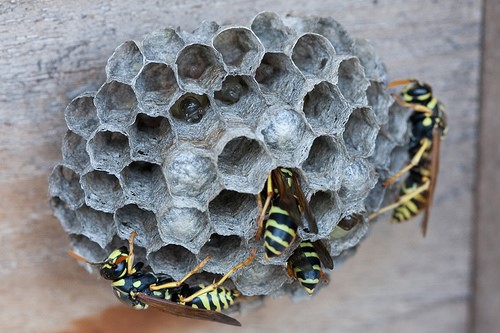 Like the buzzing bumblebee, you should be delighted (okay,
maybe just less dismayed) to find paper wasps in your garden. Yes, they may
sting, but in reality they have little interest in humans. So unless there’s a
nest of swarming wasps that feels threatening, it’s best to allow some paper
wasps to reside near your garden. Easy to attract with food, paper wasps will
also take much pleasure in eating those frustrating caterpillars that love to
chew on trees and other plants.
Like the buzzing bumblebee, you should be delighted (okay,
maybe just less dismayed) to find paper wasps in your garden. Yes, they may
sting, but in reality they have little interest in humans. So unless there’s a
nest of swarming wasps that feels threatening, it’s best to allow some paper
wasps to reside near your garden. Easy to attract with food, paper wasps will
also take much pleasure in eating those frustrating caterpillars that love to
chew on trees and other plants.
The more of these bugs you find in your garden, the easier
it is to keep your plants healthy without the use of chemicals. So think twice
before condemning any creature that moves around your plants – some of them can
be a gardener’s greatest allies!


 Posts
Posts


